
Grayslake City Directory Sources
The collection table begins with the gap itself. No official source yielded a complete Grayslake Polk series or a fully inspected sample entry. The best substitutes must retain their true locality, years, and limits.
| Collection | Years | Where held | Access |
|---|---|---|---|
| Telephone books | 1904–1959 online; 1961–2003 print, incomplete | Illinois Digital Archives and Cook regional collection | Online or library research |
| Grayslake Times | 1905–2003, with gaps | Historical Society, library, digital archive | Microfilm, print, digital facsimiles |
| School yearbooks | 1947–2012 main high-school runs, with gaps | Grayslake Historical Society | Images and archive help |
| Family and oral-history files | Collection-specific; interviews begun 1983 | Historical Society archive | Thursday help and appointment |
| Community History Archives | 1870–2029 search controls | Public digital archive | Title and time search |
Nearby reverse sources include Libertyville street guides and the Haines Criss-Cross Directory, but those are not proof of Grayslake coverage. A city directory result should always name the exact title and locality.
No Complete Grayslake Directory
The current Village directory is not a resident roll. It lists civic resources, organizations, and businesses through category, name, alphabetic, and all-entry controls. A separate registered business directory has the same broad limit: it describes organizations, not all households.
The Village business and resource directory shows the present interface.
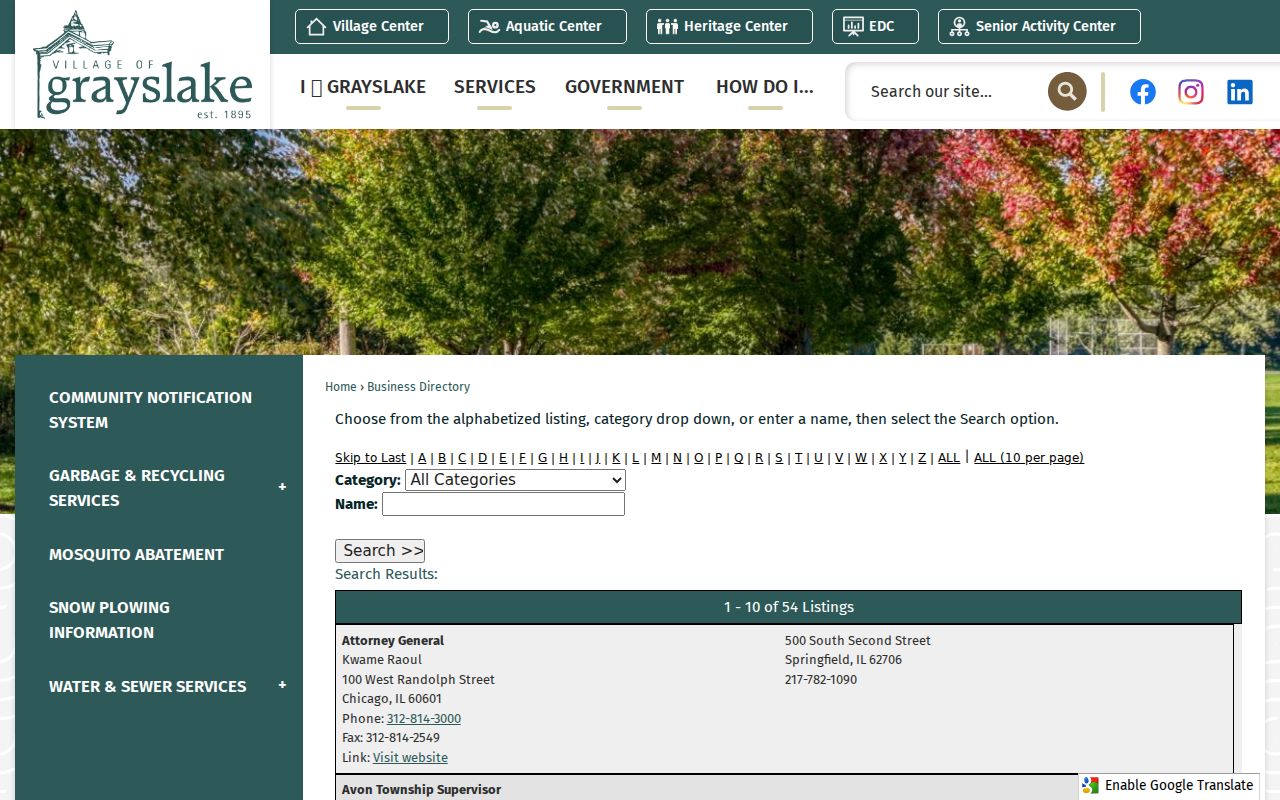
The captured page is useful for current institutions and contact routes, but it must not be labeled a citywide people list.
The registered business directory provides another organization-focused search.
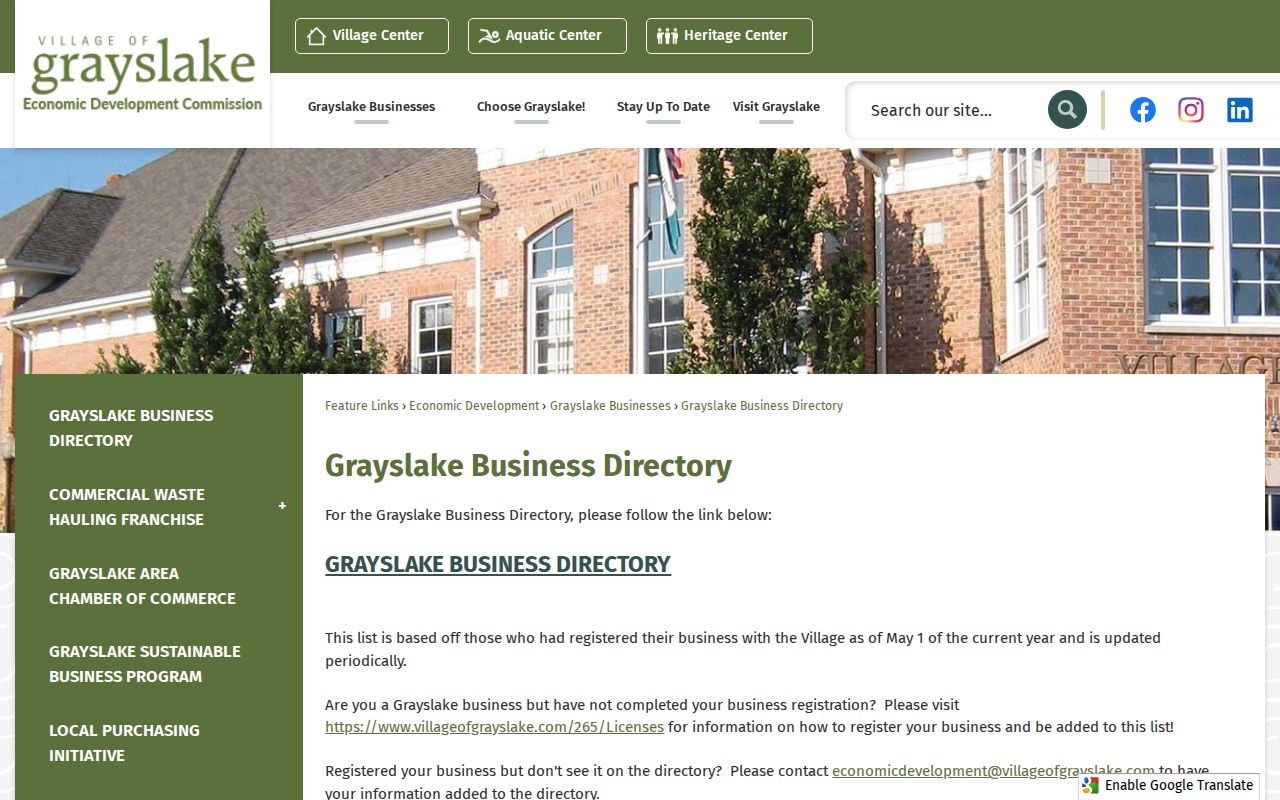
Its entries can connect a business name with current public contact data, while saying nothing about residents who are not part of the listing.
Read Grayslake Directory Evidence
A standard city directory can contain a householder name, spouse notation, occupation, business, and address. The Grayslake substitutes vary. A phone book may give a subscriber and number. A newspaper mention may connect a name to an event. A yearbook fixes a student or staff member to a school year. Never assume that a field common in one type appears in another.
| Name | Copy spelling, initials, and ordering exactly. |
|---|---|
| Place | Record the street, town form, school, business, or institution shown. |
| Date | Use the volume year, issue date, interview date, or map date. |
| Role | Preserve labels such as subscriber, student, officer, owner, or interviewee. |
| Source form | State whether the evidence is print, microfilm, image, index, or recollection. |
- Criss-cross directory
- A directory ordered by street or address instead of surname.
- Householder index
- An alphabetical list centered on the person shown as head of a listed household.
- Abbreviation key
- The volume's own explanation of shortened names, roles, street types, and symbols.
Photograph or transcribe the title page and key with the entry. Without those pages, a short mark can be easy to misread.
Grayslake's 1899 Business Snapshot
The official Village history preserves a rare directory-like snapshot from 1899. It identifies the kinds of services then present: a general store, hardware store, bank, jeweler, pharmacy, two hotels, one resort, three saloons, a lumber company, two blacksmith shops, a barber, masonry and carpentry trades, furniture and undertaking, a dentist, and a well driller.
The Village history page presents that local business context.
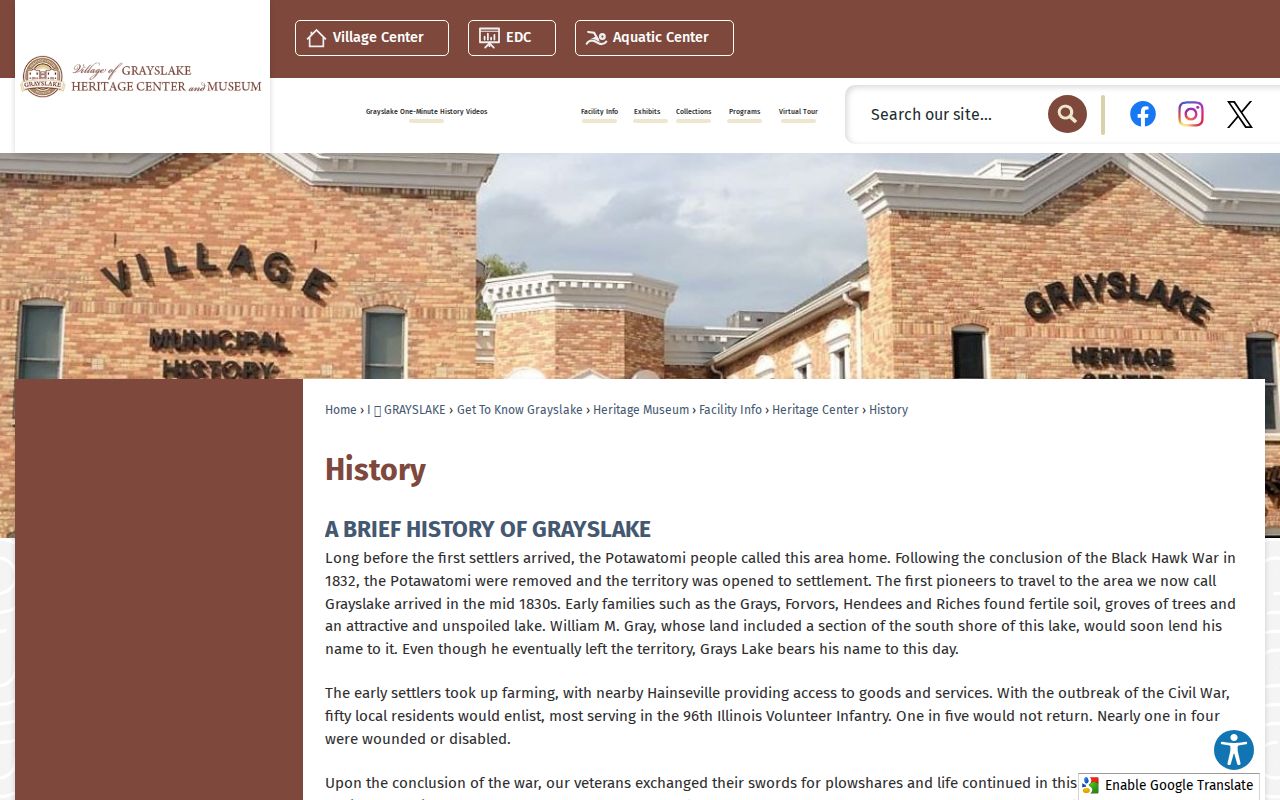
The screenshot is a starting point, not the underlying page of named entries. Search those categories in later Grayslake Times issues, plats, deeds, and Society business histories before attaching a personal name.
Search Grayslake Directory Newspapers
The Grayslake Times was published weekly from 1905 to 2003, and the title later became the Grayslake Journal. The Historical Society provides microfilm and identifies important missing runs, including all of 1914–1915, 1927, 1929, 1946, 1998, and 2010–2011, plus individual issue gaps. A blank search during those spans is not proof that an event never happened.
The Society's Grayslake Times holdings explain the collection and its gaps.
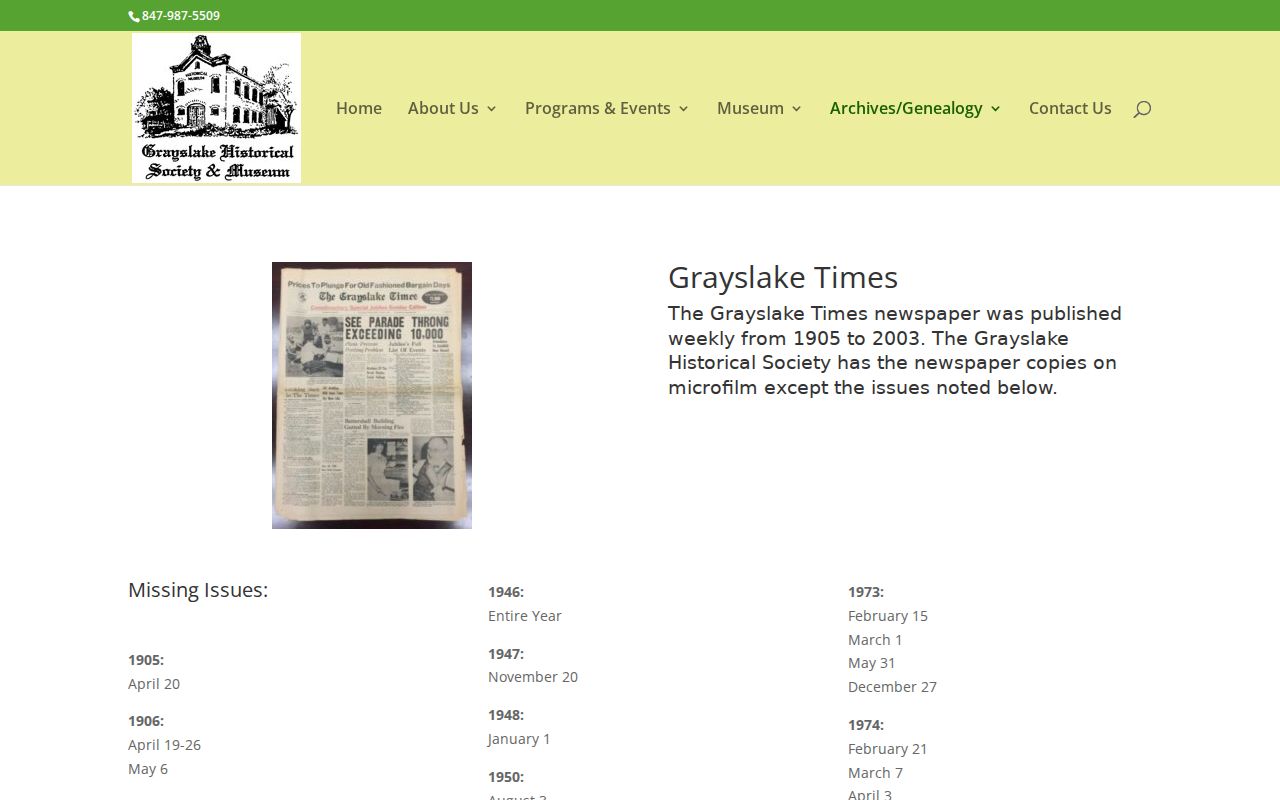
The holdings page helps identify whether a target issue survives on microfilm, as an original, or through a digital route. The Illinois Newspaper Project describes a 95-reel Society service copy and original library holdings for 1989–2002.
Search a surname with a street, school, church, business, or event. Record the issue date and page. An obituary index covers death notices from 1905–1940, while a separate local-newspaper obituary file begins in 1980.
Grayslake Directory Yearbook Names
Yearbooks offer a dated community snapshot that the missing city directory run cannot. The Society lists Grayslake Community High School's Emerald for 1947–2006, missing 1994 and 1995, and Grayslake Central volumes for 2007–2012. Selected junior, middle, and elementary school years are also held.
The Historical Society yearbook collection shows the exact school runs and gaps.
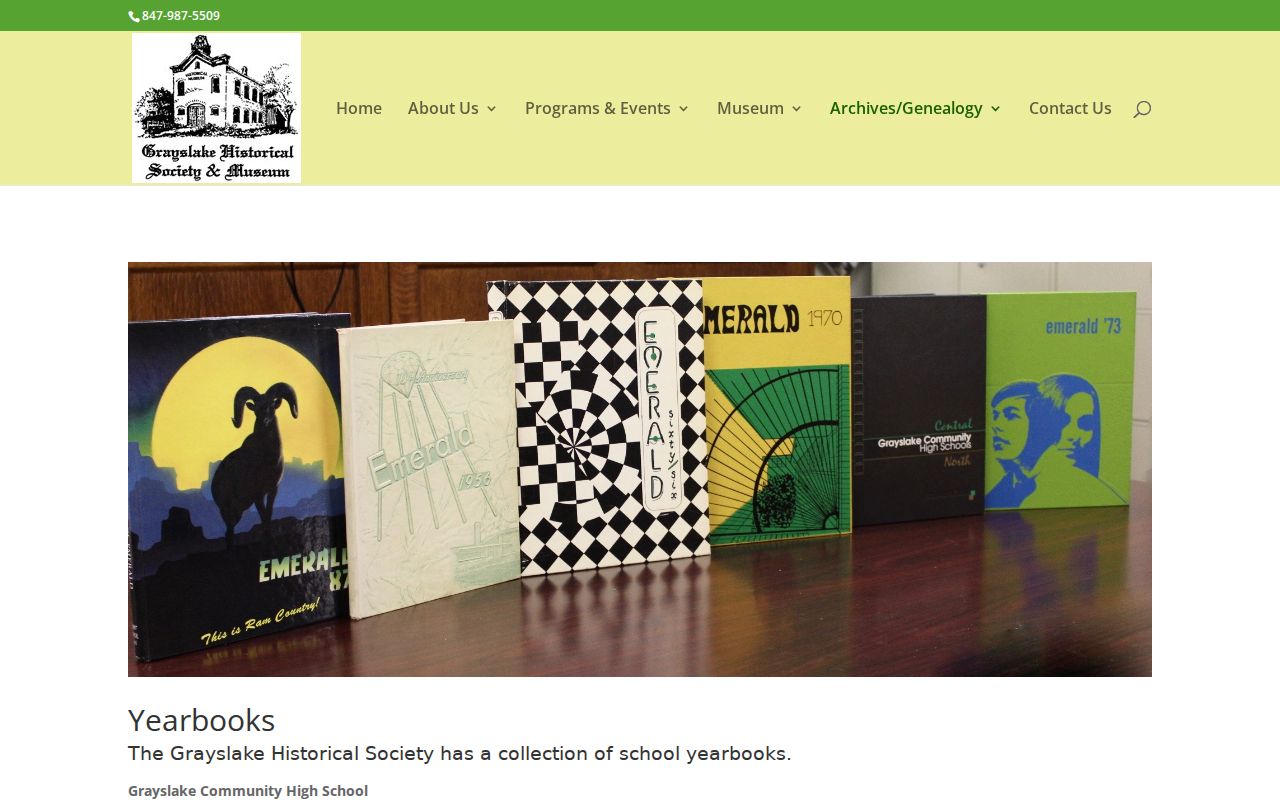
The image points researchers to named school-year sources instead of a broad claim that every local student appears. A yearbook may show a portrait, grade, club, team, or staff role. It does not prove where the person lived after publication.
Grayslake Directory Family Files
The Historical Society holds a distinctive mix of family histories, title abstracts, Avon Township records, plat books, photographs, oral histories, business histories, scrapbooks, and school material. Named family files include Rich, Hendee, Fuller, Adams, Battershall, and Forvor. Those names are collection leads, not address proof.
Researchers can use the Society family-file service on Thursdays from 11 a.m. to 4 p.m. or by appointment. Text copies are listed at 25 cents per page, while image and extensive-research charges vary. The archive tour lists 164 Hawley and 847-987-5509; verify access before visiting.
The oral-history index covers interviews from a project begun in 1983. First-person recollections can supply names and local context missed by formal indexes, but each statement remains an interview, not a deed or census fact.
Filter Grayslake Directory History Online
The Grayslake Community History Archives offers a public title search and a time slider spanning 1870–2029. Accessible research did not expose a stable sample record schema, so record the title, date range, result count, and item details shown during the live session rather than promising fields that may not appear.
The digital archive is part of an active preservation chain. The Historical Society formed in 1976, oral-history work began in 1983, and the Heritage Center opened in 2010. Online access is the current layer for material created by newspapers, schools, families, and local institutions over many years.
Map Grayslake Directory Names
Names become more useful when placed on a dated map. The verified Sanborn set is Grays Lake, 1934, four sheets. Regional sources add an 1885 Lake County atlas, plats, aerials, and county GIS. Sanborn maps show footprints, use, materials, and street labels, not a full household census.
The 20-stop Grayslake History Trail supplies a practical place index.
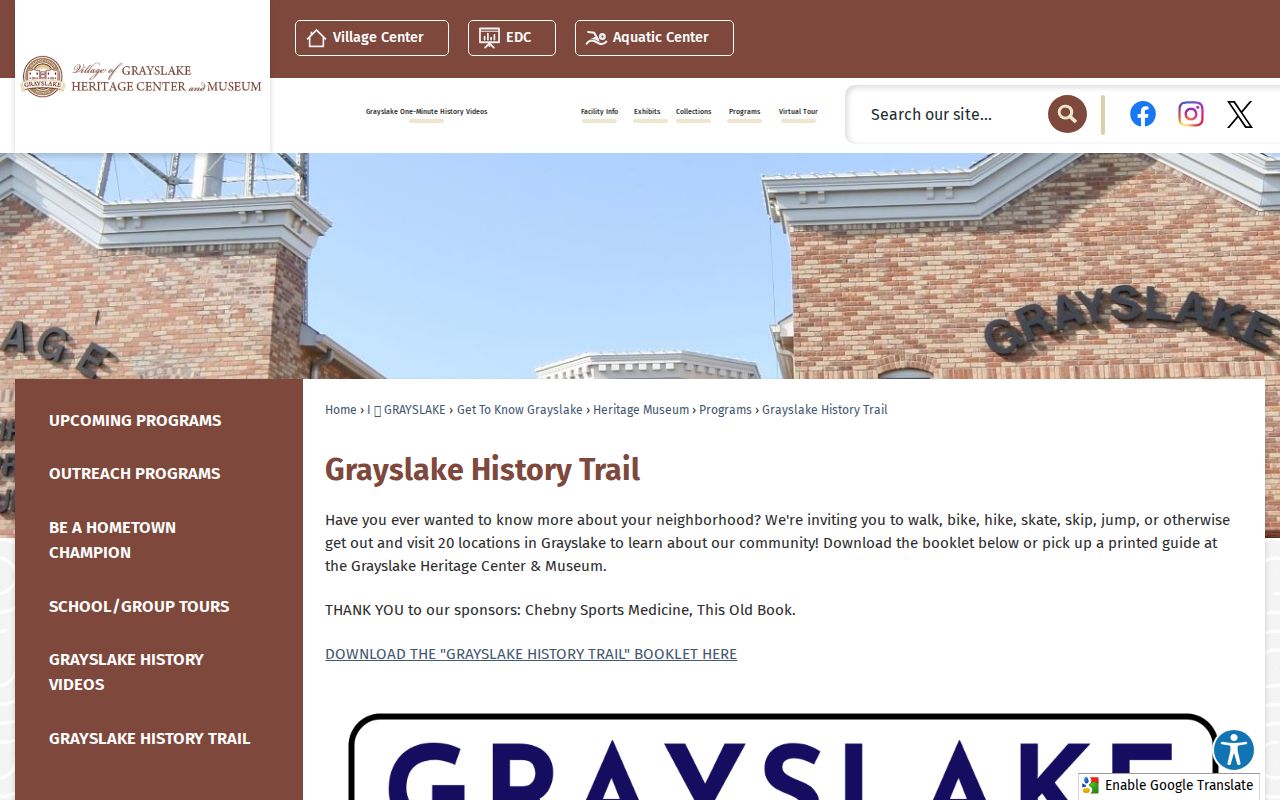
The trail can connect a historic site with its modern parcel, then lead into newspaper, map, deed, or archive research. Oakland's 1913 development, locally called Klingerville, is one example where legal and familiar place names must stay distinct.
Note: Early records may use Gray's Lake, Grays Lake, a railroad stop, route, lot, or landmark instead of a modern address.
Trace Grayslake Families by Year
A good Grayslake city directories workflow treats every collection as a dated checkpoint. It also plans for the destroyed 1890 census, incomplete telephone books, newspaper gaps, and the absence of a full local Polk run.
- Begin with the most exact surname spelling and a date range. Test initials and common variants.
- Search the local archive, newspaper holdings, yearbooks, family files, and phone-book routes separately.
- Record the exact title, year, page, locality, and role shown. Do not merge entries yet.
- Pair directory years with available census, vital, deed, cemetery, probate, map, or obituary evidence.
- Follow the name forward and backward, noting moves, street-name changes, and missing publication years.
A disappearance may mean a move, death, spelling change, unlisted phone, missing volume, or source gap. Verify a modern person through current official records only when that is a lawful personal need; the Grayslake resident lookup keeps that task separate from historical shelf research.
The result should be modest and precise: a person appears in a named source at a stated time, connected to the place or role that source actually shows.